
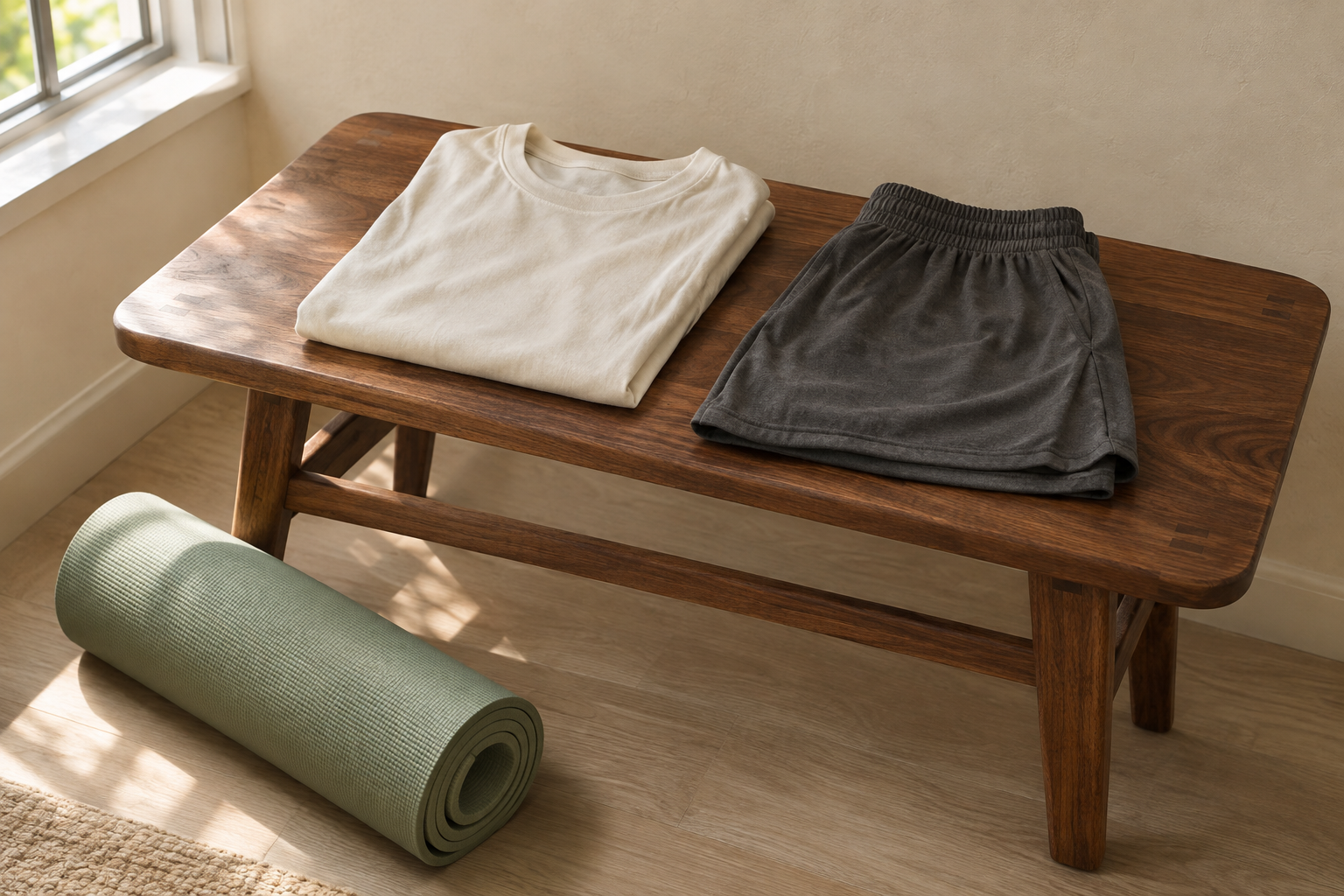
Workout clothing should help you move comfortably and make it easier to care for yourself. Yet fabric labels, performance claims, and warnings about chemicals can make a simple purchase feel complicated.
At River Ternary, I favor natural materials and thoughtful purchases. That preference belongs alongside a clear view of the evidence: a synthetic fiber label alone does not tell us that a garment is harming your hormones. Fit, skin sensitivity, finishes, and how you care for clothing all deserve attention.
Reviewed and updated November 7, 2026.
Start With Comfort, Friction, and Sweat
The American Academy of Dermatology (AAD) explains that heat, trapped sweat, and friction can contribute to acne mechanica—breakouts associated with clothing or equipment rubbing against skin. A waistband, seam, or strap that repeatedly rubs can matter as much as the name of the fiber.
For sweaty workouts, AAD recommends moisture-wicking materials, including some synthetics. A comfortable cotton shirt may suit a walk or gentle session; a garment that handles sweat well may suit a longer, more intense workout. Notice how each piece feels during movement and afterward.
- Check the fit in motion: Reach, bend, squat, and walk before deciding. Look for freedom of movement without persistent rubbing or digging.
- Consider the whole outfit: Waistbands, undergarments, socks, and seams can create pressure or friction even when the main fabric feels soft.
- Match clothing to the activity: Choose support, coverage, and comfort for the workout you actually do.
Skin Irritation Is Different From Hormone Disruption
An itchy rash where clothing touches your skin may reflect irritation or contact allergy. AAD identifies textile dyes, certain finishing chemicals, metals, and fabrics among possible triggers. Natural fabric is not an automatic guarantee against a reaction.
If one garment repeatedly causes trouble, stop wearing it and note where and when symptoms appear. A persistent or recurring rash deserves assessment by a dermatologist, who can determine whether allergy testing or another approach is appropriate.
What Chemical-Exposure Research Can Tell Us
NIEHS describes endocrine-disrupting chemicals as substances that can interfere with hormone actions. That is a reason to study exposure carefully, but identifying a chemical in a product does not, by itself, show the dose a wearer absorbs or establish a resulting illness.
A 2024 study of 57 textile samples detected bisphenols and modeled potential skin exposure under dry and sweat-wet conditions. Some wet-textile exposure estimates raised concerns relative to the benchmark used by the researchers. These findings merit further investigation. The study did not follow people wearing workout clothes and demonstrate hormonal disease, infertility, or cancer.
Fiber content, chemical treatments, and actual exposure are related but different questions. Avoid treating polyester, nylon, or elastane as shorthand for a specific chemical dose—or presenting all synthetic clothing as a proven cause of chronic illness.
Ask About Finishes You Do Not Need
ATSDR lists water-repellent clothing among products that may contain PFAS. This does not mean every water-resistant garment uses the same chemistry or that an ordinary workout shirt necessarily contains PFAS.
For a new purchase, ask what a stain-resistant, water-repellent, or odor-control claim means and whether the manufacturer provides a specific chemical policy or independent testing. If a finish adds little value for your activity, choosing a simpler garment is a reasonable preference.
For outdoor exercise, keep useful protection in view too. AAD recommends sun-protective clothing and other sun protection; a performance feature should be evaluated for its actual purpose rather than rejected solely because the garment is technical.
Read Fiber Labels and Certifications Carefully
- Look at the complete fiber percentages: A product described as “cotton” in a headline may include other fibers. Choose the composition you prefer while checking fit and performance.
- Be specific about bamboo: The FTC explains that many textiles marketed as bamboo are rayon made from bamboo. This is a processed cellulose fiber, not the same thing as unprocessed bamboo fiber.
- OEKO-TEX STANDARD 100: This certification tests textiles for harmful substances against the program’s criteria. It is not a claim that the garment is made entirely from natural or organic fibers.
- GOTS: The Global Organic Textile Standard addresses organic fiber content and environmental, chemical, and social criteria through textile processing. Check the exact certified product and label grade; certification does not necessarily mean 100% cotton.
Neither certification is a promise that no one will develop irritation or that a garment contains no chemicals. Use the standard for the question it is designed to answer.
Build a Simple Post-Workout Care Routine
AAD recommends washing workout clothes after wearing them, showering as soon as possible, and changing into clean clothing. Give sweaty items a place in your laundry routine rather than continuing to wear them for hours.
Follow each care label. If fragrance bothers your skin, compare fragrance-free laundry products. See our laundry product guide and dryer-sheet and fabric-softener guide for practical considerations. Washing is routine care, not a guarantee that every treatment or residue has been removed.
Keep Environmental Concerns in Perspective
NOAA identifies fibers released when synthetic clothing is washed as one source of microplastic pollution. That environmental concern is separate from proving that fibers penetrate a wearer’s skin and cause disease. Microplastic particles should not simply be described as interchangeable with individual endocrine-disrupting chemicals.
Care for clothing you use, repair it when practical, and replace pieces deliberately. You do not need to discard a working wardrobe to begin making more considered choices.
Choose Clothing That Supports the Habit
Start with one recurring problem: a rubbing seam, a shirt that feels uncomfortable when damp, a finish you do not need, or a garment you cannot easily wash. Solve that problem when the next purchase is due.
For more on fiber choices, explore our natural clothing materials guide. Choose items that reflect your preferences and help you keep moving comfortably—without making every workout another source of worry.
Sources & Further Reading
- American Academy of Dermatology: How Your Workout Can Affect Your Skin.
- American Academy of Dermatology: Sports Equipment and Acne.
- American Academy of Dermatology: Contact Dermatitis.
- American Academy of Dermatology: Preventing Gym Skin Infections.
- NIEHS: Endocrine Disruptors.
- Jurikova and colleagues (2024): Bisphenols in Conventional and Recycled Textiles.
- ATSDR: PFAS and Your Health.
- FTC: Bamboo and Rayon Textile Claims.
- OEKO-TEX: STANDARD 100.
- GOTS: Key Features.
- NOAA Marine Debris Program: Microplastics and Microfibers.
Leave a Reply