
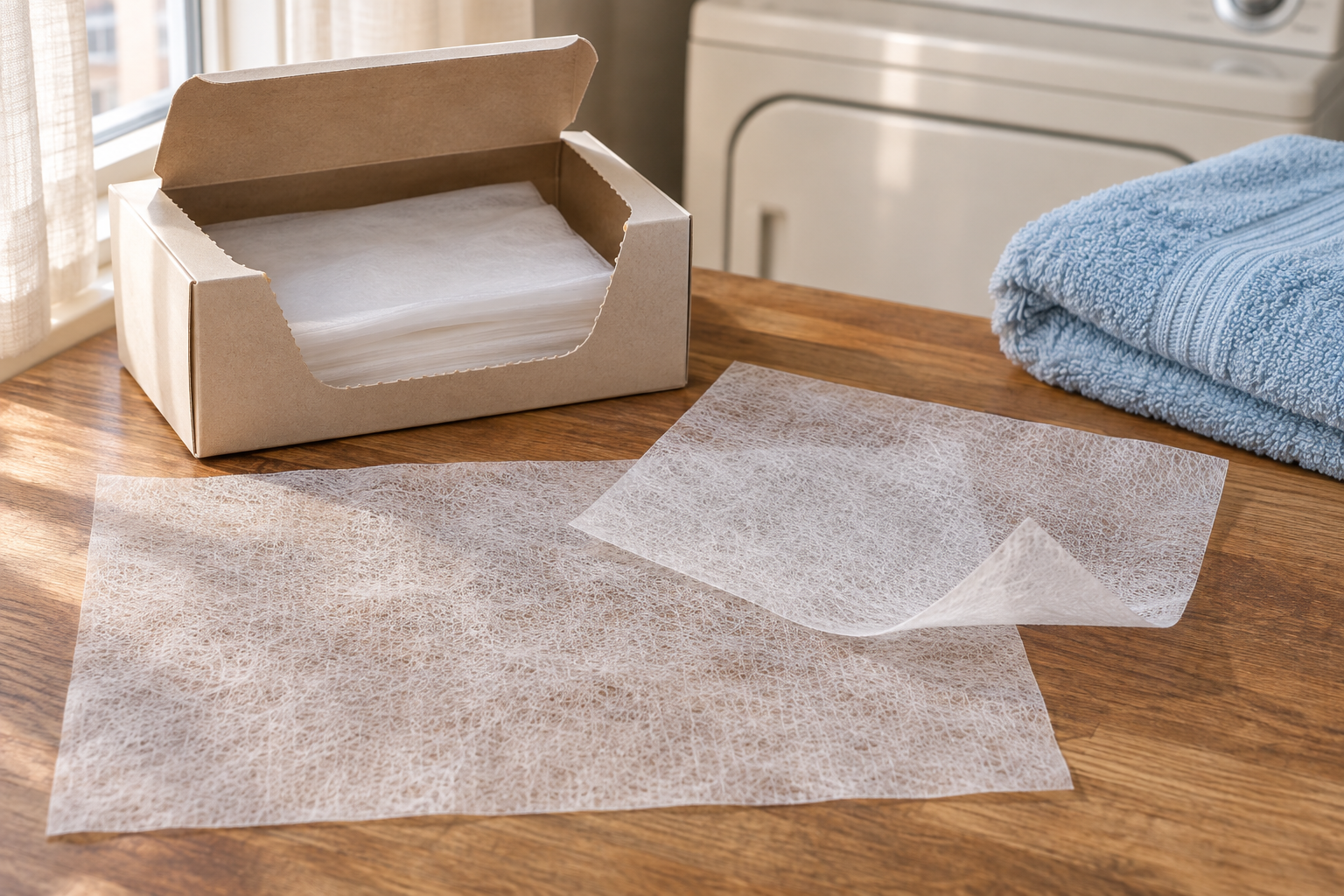
When I first stopped buying dryer sheets during the pandemic, it was a cost-cutting decision. They felt like an extra I could do without. I later chose wool dryer balls as a reusable option, and they remain my preference.
You do not need fabric softener or dryer sheets to get laundry clean. Whether you use them can come down to the feel you prefer, fragrance sensitivity, the fabrics you own, and how much you want to keep buying. Here are the practical reasons to consider a simpler routine.
Reviewed and updated November 7, 2026.
What These Products Actually Do
Maytag distinguishes detergent from fabric softener: detergent cleans, while softener changes the feel of fabric and may add scent. Softener is optional. Dryer sheets provide softening and anti-static ingredients during drying; formulations may also include fragrance.
These are useful functions for some households, but they are different from removing dirt. Clean laundry does not have to carry a strong scent, and you can decide whether an extra finishing product adds something you need.
Consider Skin and Fragrance Preferences
For people with eczema, the American Academy of Dermatology notes that scented fabric softener or dryer sheets may contribute to irritation. That is a specific reason to reconsider a product, rather than assuming every formula will affect everyone in the same way.
If fragrance bothers you, review the whole routine: detergent, softener, sheets, and other additives. Removing one scented item while keeping several others may not achieve the change you want. A persistent skin problem deserves attention beyond simply changing laundry products.
Check Which Fabrics Should Skip Softener
The coating that creates a softer feel can interfere with some fabrics’ intended function. Maytag advises against dryer sheets on several types of laundry, including:
- Towels: Softeners can reduce absorbency.
- Moisture-wicking activewear and microfiber: Coatings may interfere with their performance.
- Flame-resistant clothing: Softeners may affect the fabric’s protective properties.
- Water-repellent items: A coating can interfere with water-repelling performance.
Read the garment label and laundry product instructions before use. Natural fiber content alone is not enough to decide: a cotton towel still needs to absorb water, and a garment may have finishes or construction that require specific care.
Maintain the Dryer, Whatever You Use
Residue on the lint screen is a maintenance issue worth checking. GE Appliances recommends cleaning the lint filter after each use and periodically washing it with warm, soapy water when fabric softener or anti-static conditioner is used. Follow your own model’s instructions and dry the screen before replacing it.
Do not assume that skipping dryer sheets removes the need for dryer maintenance. Filters, venting, and any condenser components still need the care specified in the manual.
What I Use Instead: Wool Dryer Balls
Wool dryer balls are my choice for a reusable laundry tool. They give me an option that does not require adding a new disposable sheet to each load.
Maytag explains that dryer balls help separate garments as they tumble, allowing air to circulate. They may help with drying time and wrinkles, but results depend on the load and machine. They are not a guarantee of a fixed percentage saving or completely static-free clothes.
Check that dryer balls suit your appliance and laundry, follow the product directions, and leave room for items to tumble. If wool does not suit your household, you can also try a load without either sheets or balls before buying an alternative.
Keep the Balls Unscented
Essential oils are not a necessary part of using dryer balls. Maytag advises against adding oils because of flammability concerns. An unscented routine is the approach recommended here; follow the appliance instructions for anything added to the dryer.
For cleaning, drying, and storage, see How to Clean and Care for Wool Dryer Balls.
If Static Is the Main Problem
Start with the cycle and load rather than another additive. Whirlpool identifies overdrying, fabric mix, and dry conditions as contributors to static.
- Use a suitable drying cycle and moisture-sensing setting where available.
- Keep synthetic garments separate from other fabrics when practical.
- Follow loading guidance so clothing can tumble freely.
- Consider air drying suitable items, while allowing them to dry fully before storage.
For help setting up a rack or choosing hangers and flat drying, read Air Drying: How to Naturally Dry Your Clothes.
Make One Change and See What You Need
Try leaving out softener and dryer sheets for an appropriate load. Notice the feel, scent, and drying result. You may find you do not need a replacement product, or you may choose a reusable tool that fits your routine.
For me, the original saving was enough reason to question a repeat purchase. Using fewer disposable sheets is another practical benefit.
Explore Choosing Laundry Products for buying guidance, River Cabinet for individual product selections, and Healthy Home & Environment for more household routines.
Leave a Reply