
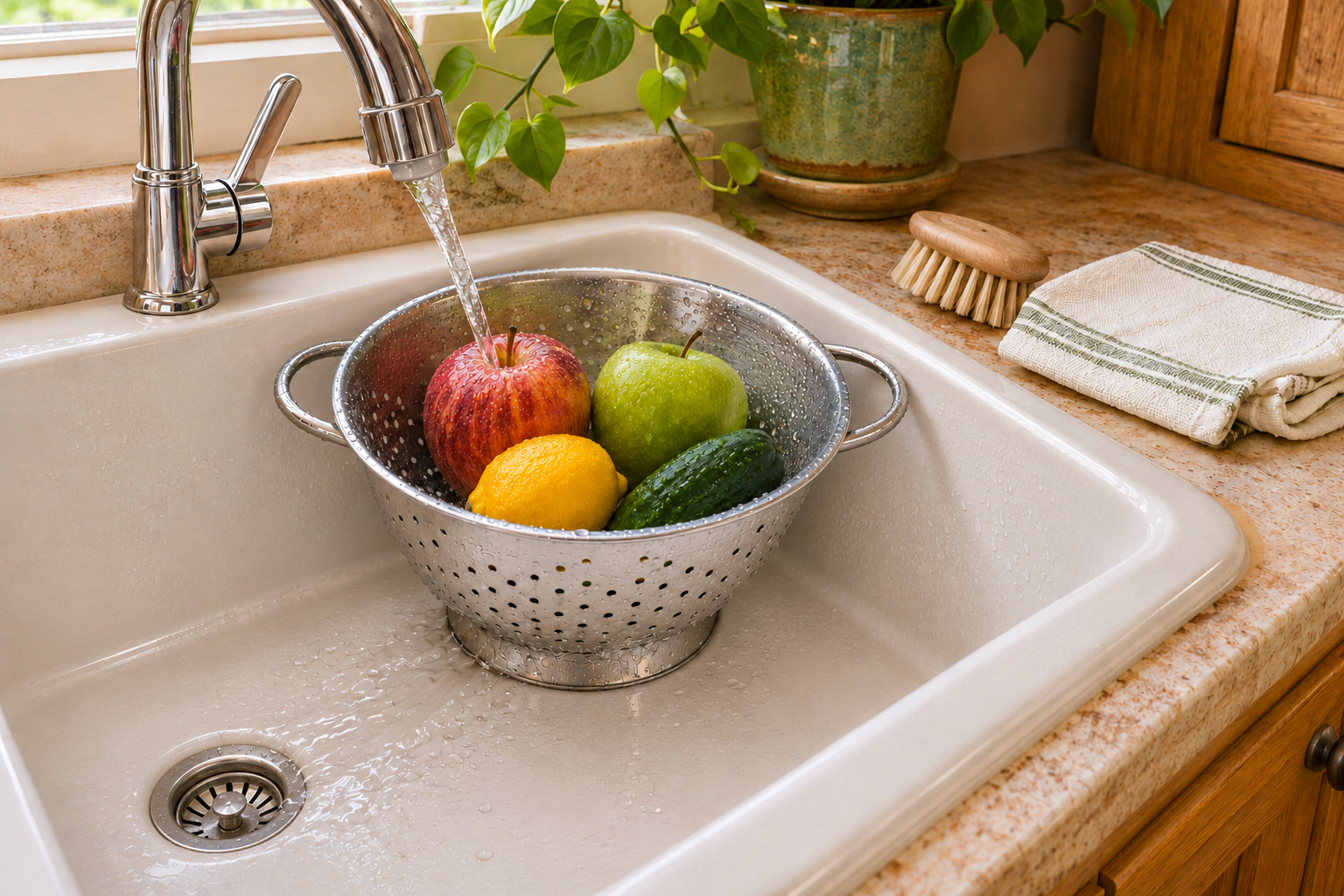
A shiny apple or a sign about waxed produce can raise a reasonable question: what is on the surface, and what should you do before eating it? Understanding the coating can help you choose produce that fits your preferences without making food preparation more complicated.
Some fruits develop their own natural wax, and some produce receives an added edible coating after harvest. Washing is still important, but cleaning produce and completely stripping a coating are different goals.
Reviewed and updated November 7, 2026.
Why Is Wax Added to Produce?
Natural wax helps protect fruit from moisture loss. Postharvest handling can remove some of it, and an added coating can help maintain quality. FDA describes produce coatings as a way to retain freshness during shipment, extend shelf life, and improve appearance.
There is no single coating used on every fruit or vegetable. The formulation and its permitted use matter more than judging the surface by how shiny it looks.
Examples include carnauba wax, derived from a palm, and shellac-based coatings, derived from an insect resin. The Organic Materials Review Institute describes these and other coating materials. If the source matters for a vegan diet or another personal preference, ask about the particular produce rather than assuming all wax is plant-based.
What Does the Safety Guidance Say?
FDA’s guidance on coated fruits and vegetables describes the permitted regulatory routes for coating ingredients and the requirement to disclose that a coating has been applied. University of Minnesota Extension explains that coatings used according to FDA requirements are safe to consume.
An approved edible coating does not need to be treated as something that must be completely stripped away before you can eat the produce. You may still prefer unwaxed items or choose to peel a particular fruit. That is a preference you can act on without assuming that a glossy surface establishes a health hazard.
How to Wash Produce at Home
For everyday preparation, follow FDA’s produce-handling guidance:
- Start with clean hands and equipment. Wash your hands with soap and water for at least 20 seconds. Use a clean preparation area, utensils, and colander.
- Check the condition. Cut away damaged or bruised areas and discard produce that is rotten.
- Rinse under running water. Gently rub the surface while rinsing. Wash even if you plan to peel it, so cutting or peeling does not carry surface dirt and bacteria inward.
- Use a brush where appropriate. A clean produce brush is suitable for firm items such as cucumbers and melons. Handle delicate produce gently.
- Dry with a clean towel. Use a clean cloth or paper towel after washing.
- Keep expectations realistic. Washing can reduce bacteria, but it does not eliminate all of them.
Soap belongs in handwashing and equipment cleaning, not on the produce itself. FDA does not recommend washing fruits and vegetables with soap, household detergent, or commercial produce wash.
Can You Remove the Wax?
Gentle rubbing or brushing during washing can help remove surface wax. Utah State University Extension recommends a soft cloth or vegetable brush for unwanted wax and residues on apples. Use a method that will not damage the produce.
Do not count on a rinse to remove every trace of coating. Texas A&M AgriLife notes that water washing may not remove wax, while still advising against soap. If you prefer not to eat the coated skin, wash first and then peel the item where appropriate.
You can also ask a grower or retailer for produce with no added coating. This is often a more direct way to meet that preference than trying to prove that a home washing method removed everything.
What About Vinegar, Baking Soda, or Hot Water?
These are not necessary steps in the routine recommended here. University of Minnesota Extension advises against soaking produce and notes that vinegar and baking soda can affect its flavor. It recommends cool running water rather than hot water.
Vinegar should not be presented as a reliable produce disinfectant. FoodSafety.gov notes that vinegar and several other kitchen ingredients have not been shown effective at removing germs from produce. Keep the method simple rather than combining treatments or scrubbing delicate skins with a paste.
Does Organic Mean Unwaxed?
No. OMRI explains that certain coatings can be used in organic handling, subject to the applicable requirements. An organic label does not, on its own, tell you that nothing has been applied after harvest.
Read package information and store signs, and ask the retailer about a specific item when needed. Homegrown and farmers’ market produce should also be washed before preparation; where it was grown does not replace that step.
A Practical Approach to Choosing Produce
Choose fruits and vegetables you enjoy, in good condition, and in quantities you can use. If avoiding an added coating matters to you, ask about it when shopping. At home, make rinsing, appropriate brushing, and clean preparation part of the routine.
Find more food education in Haven Guides & Learning Resources, alongside Haven Provisions’ approach to thoughtful nourishment and everyday cooking.
Sources & Further Reading
- FDA: Chemicals in Foods — Produce Coatings; Safety and Labeling of Coated Produce.
- FDA: Selecting and Serving Produce Safely.
- University of Minnesota Extension: Washing Fresh Fruits and Vegetables Safely.
- Utah State University Extension: Apples; Texas A&M AgriLife: Washing Fresh Fruits and Vegetables.
- OMRI: Fruit and Vegetable Coatings.
- FoodSafety.gov: Safe Ways to Handle and Clean Produce.
Leave a Reply