
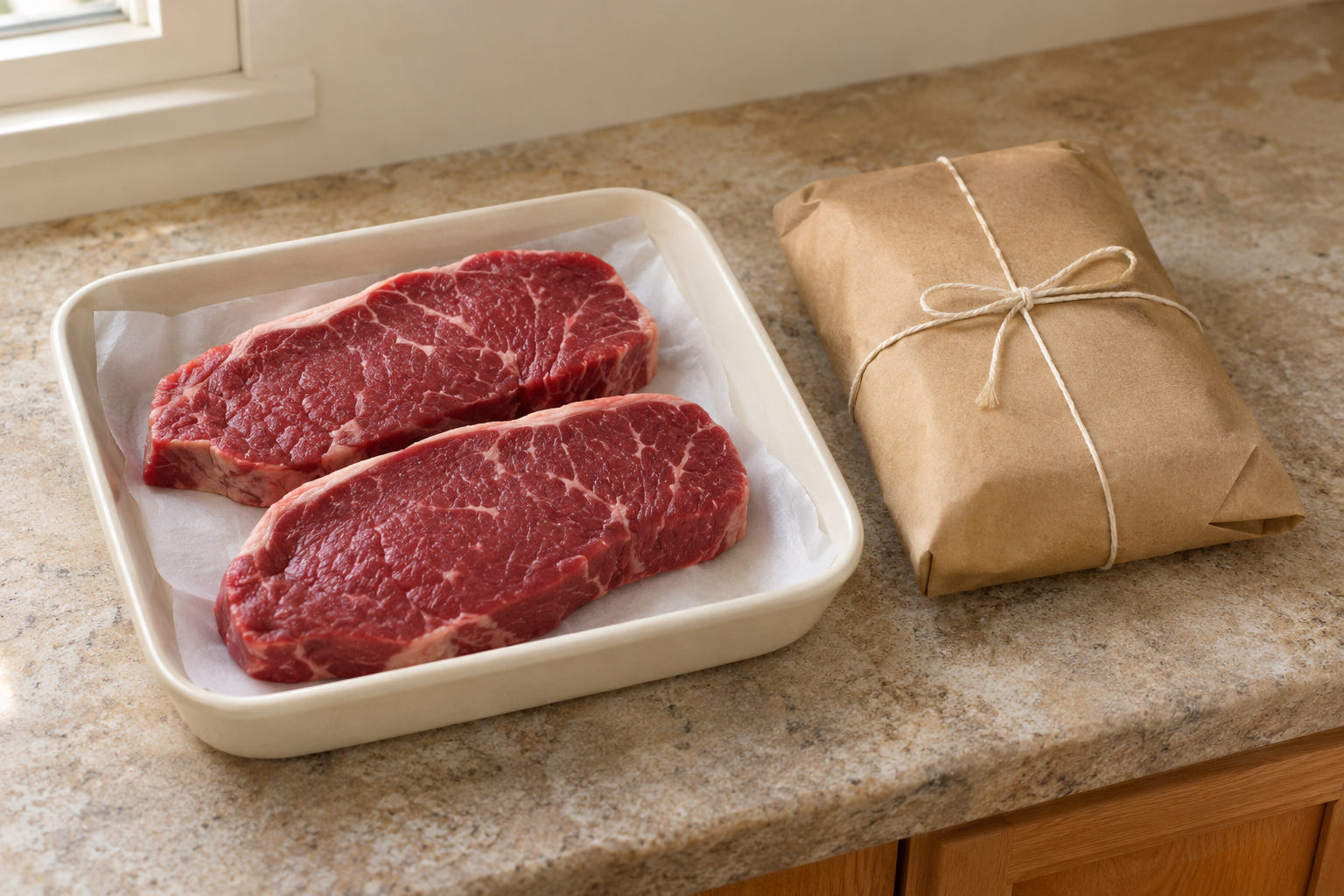
Buying beef becomes easier when you separate a few questions: which cut suits the meal, how much you want to spend, and which farming practices matter to you. One label rarely answers all three.
At Haven Provisions, thoughtful sourcing sits alongside flavor and practical everyday cooking. This guide explains the main terms and the questions worth asking, so you can choose beef that fits your priorities and your kitchen.
Reviewed and updated November 7, 2026.
Choose the Meal Before the Label
Begin with how you plan to cook. A cut suited to a long braise may be a better purchase for a stew than an expensive steak. For a quick dinner, ask the butcher for a cut that works with the time and equipment you have.
- For a quick steak dinner: Ask about suitable grilling or skillet cuts and how their thickness affects cooking.
- For a slow-cooked meal: Chuck can be a useful option. University of Minnesota Extension describes chuck arm roast as economical and suited to slow cooking.
- For stir-fries or thinly sliced beef: Ask about preparation, trimming, and slicing across the grain. Cut names vary between shops.
- For ground beef: Compare the lean-to-fat ratio, pack size, and intended recipe. Check ingredients if buying seasoned meat or a blend containing organs.
Compare cost per usable meal, not just price per pound. Bones, trimming, pack size, and whether you will use or freeze the whole purchase affect its value.
Grass-Fed and Grass-Finished: Read the Whole Claim
USDA FSIS describes “grass (forage) fed” as a lifetime forage-based diet, except for milk before weaning, with no grain or grain byproducts and pasture access during the growing season. Grass-fed should not be defined simply as cattle starting on grass before grain finishing.
When a package uses “grass-finished,” read the producer’s definition rather than treating the phrase as a separate guarantee of everything about the animal’s life. If a lifetime forage diet is your priority, ask whether grain was fed at any stage after weaning and what verification supports the claim.
A certification can help when you understand its scope. The American Grassfed Association publishes its standards; read the requirements behind the mark rather than assuming every grass-related logo means the same thing.
What USDA Organic Covers
USDA organic livestock standards address organic feed, living conditions, preventive health care, and restrictions on antibiotics and hormones. Certified operations maintain records and undergo inspections.
Organic does not automatically mean a lifetime diet without grain. Organic feed can include grain, so look for a separate feeding claim if you want both organic and grass-fed beef.
USDA also requires treatment of sick or injured animals. Producers must not withhold necessary treatment to preserve organic status; an animal treated with a prohibited substance cannot be sold as organic.
Natural, Pasture-Raised, and Regenerative Are Different Questions
Natural: FSIS defines this in terms of minimal processing and no artificial ingredients or added color. It does not, by itself, describe a lifetime feeding program or certify farming practices.
Pasture-raised: Look for a clear explanation of pasture access, time spent there, feed, and any certification. FSIS’s labeling guidance discusses documentation for animal-raising claims and encourages third-party verification.
Regenerative: Ask which practices the producer uses, what the claim covers, and whether results or practices are independently checked. A broad environmental term is not enough to establish the impact of a particular farm or product.
You can value grazing practices, animal care, and soil stewardship without assuming a label guarantees better nutrition or one specific health outcome.
USDA Grades Describe Eating Quality
USDA quality grading is voluntary and evaluates traits related to tenderness, juiciness, and flavor. It is different from inspection and from claims about how an animal was raised.
- Prime: Abundant marbling.
- Choice: Less marbling than Prime, while still a high-quality grade.
- Select: Generally leaner, with less marbling than the higher grades.
The grade can help you anticipate eating quality, but it does not tell you whether the animal was grass-fed, organically raised, or from a local farm. Match both the cut and grade to the way you intend to cook.
Questions to Ask a Butcher or Producer
- Where was the animal raised, and who can explain its feeding and finishing program?
- What standards support the claims on this particular product?
- Which cut gives good value for the meal I want to make?
- Has it been mechanically tenderized, injected, or seasoned, and are there specific preparation instructions?
- If ordering a larger box or freezer share, what is the final packaged weight, cut mix, total cost, and storage requirement?
Buying directly can make those conversations easier, but location alone does not guarantee quality or sustainability. Clear answers, appropriate handling, and a purchase size you can use matter wherever you shop.
Explore Haven’s Farms, Ranches & Producers for sourcing selections. Check current product information with the seller before ordering; a producer may offer several feeding programs or product lines.
Plan for Storage Before You Buy
At home, keep beef refrigerated at 40°F (4°C) or below. USDA recommends using or freezing raw ground beef and organ meats within 1–2 days, and steaks and roasts within 3–5 days. Keep raw meat contained so juices cannot reach other foods.
If a larger pack is good value, portion and freeze what you will not use in time. Label it so you can find the right amount later. A bargain that exceeds your freezer space or meal plans may not be a useful saving.
Use the Right Cooking Target
Use a food thermometer. USDA recommends 160°F (71°C) for ground beef and organ meats, and at least 145°F (63°C) for raw beef steaks and roasts followed by a minimum three-minute rest.
For mechanically tenderized products, follow the package’s validated cooking instructions, including any hold time. FSIS explains why these instructions appear on the label.
A Thoughtful Purchase Does Not Have to Be the Most Expensive
Choose the sourcing standards you care most about, a cut suited to your meal, and an amount you can handle well. It is reasonable to balance those priorities with price and availability.
Find more shopping and preparation guidance in Haven Guides & Learning Resources, and explore the Haven Pantry’s producer selections when planning your next purchase.
Sources & Further Reading
- USDA FSIS: Grass-Fed Meat; Natural Beef; Beef Grades.
- USDA AMS: Organic Livestock; Organic Standards.
- USDA FSIS: Animal-Raising and Environment-Related Labeling Claims (PDF); American Grassfed Association: Standards.
- University of Minnesota Extension: Beef Cuts on a Budget.
- USDA FSIS: Beef Storage; Cooking Temperatures; Mechanically Tenderized Beef Instructions.
Leave a Reply