
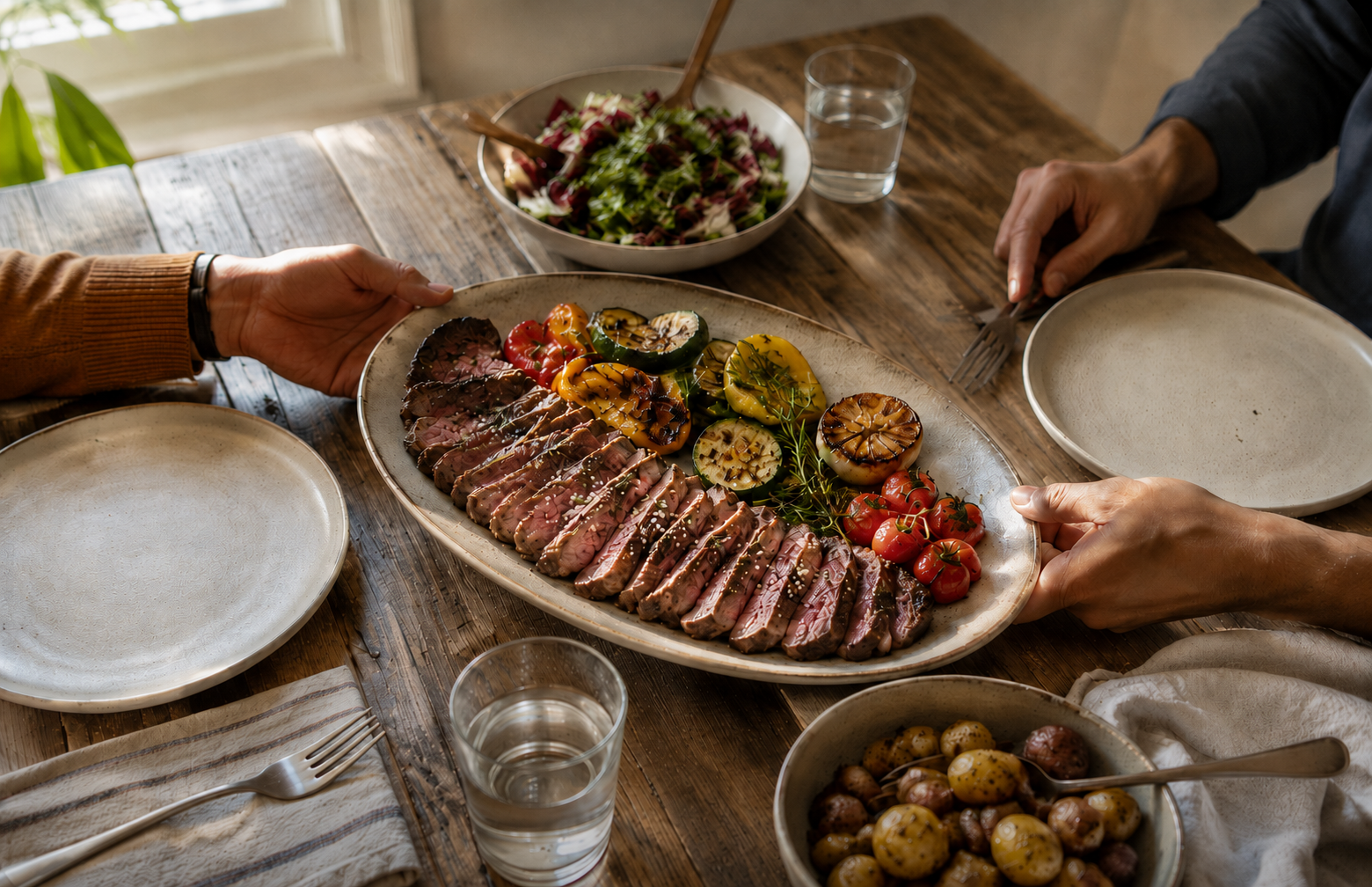
Eating well needs to fit the life you actually lead. Alongside nourishment, our meals carry pleasure, culture, memory, and connection. Those things deserve a place at the table, even when work, family, and caring for others leave little room for ourselves.
Rigid instructions—no carbohydrates, salads every day, or never eat between meals—can make eating feel like another task to get right. I prefer a few flexible principles that leave room for individual needs, familiar foods, and the realities of a busy day.
Nutrition still matters, of course. The foods we eat influence our energy, muscle mass, digestion, metabolic health, and long-term disease risk. But health is not determined by nutrients alone. Stress, sleep, relationships, culture, access to food, and the environment in which we eat can also influence our eating patterns and well-being.
Instead of treating food as punishment—or believing every bite must be nutritionally perfect—I try to follow three flexible principles that nourish the body while leaving room for pleasure, tradition, and connection.
These are not medical rules or requirements. They are simply guides I return to when eating begins to feel unnecessarily complicated.
Together, they reflect River Ternary’s approach to Body, Mind, and Home: nourishing the body, making space for satisfaction and emotional well-being, and creating surroundings and routines that make meals easier.
Reviewed and updated November 7, 2026.
Rule #1: Make Meals Colorful
There is a reason we often hear the phrase “eat the rainbow.”
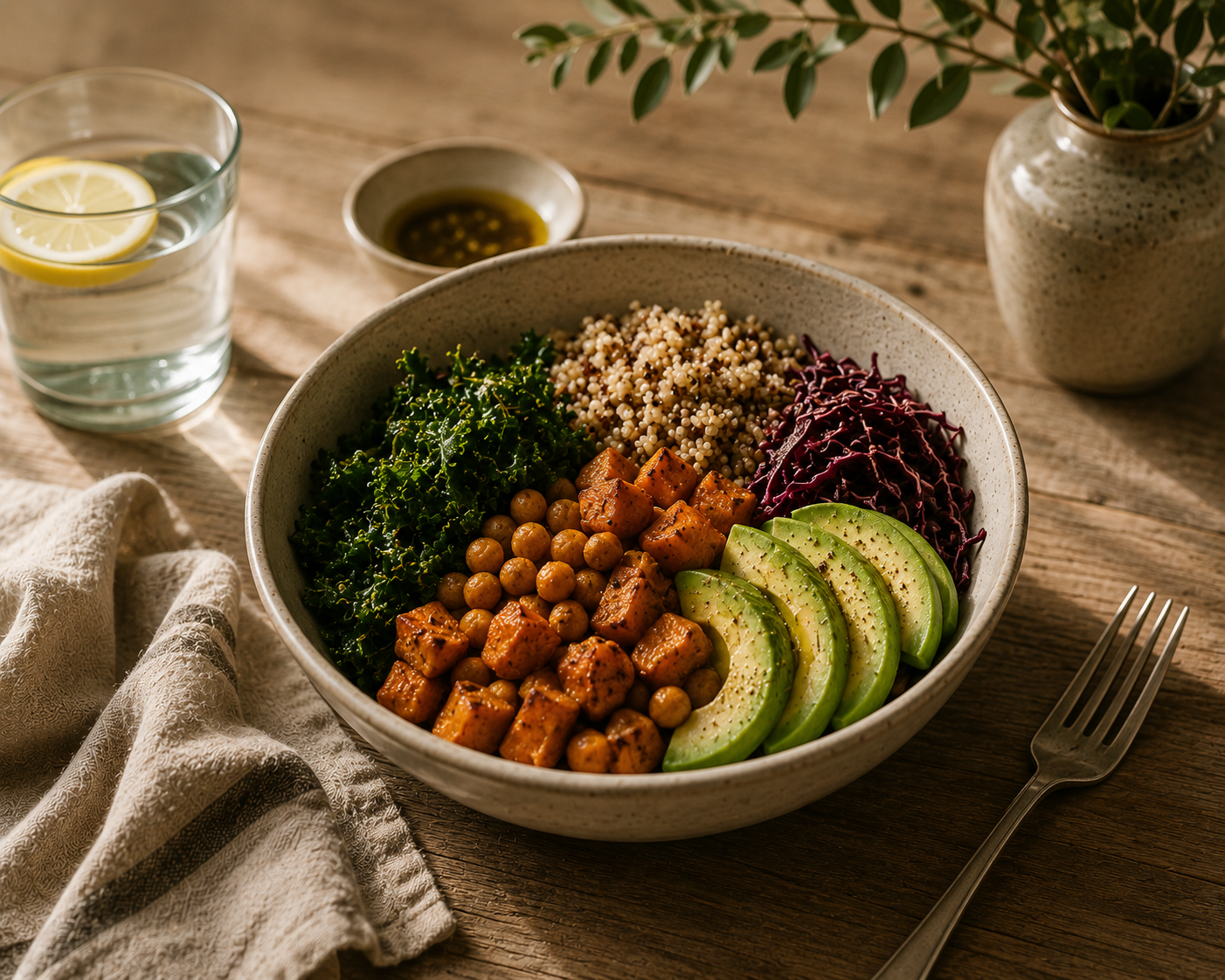
The natural pigments that give fruits, vegetables, herbs, beans, and other plant foods their colors are associated with a variety of bioactive compounds. Eating a range of colorful foods can help diversify our intake of vitamins, minerals, fiber, and phytonutrients.
Different colors may offer different—but often overlapping—compounds:
- Red foods, including tomatoes, watermelon, and pink grapefruit, may provide lycopene. Red berries and cherries also contain anthocyanins and other polyphenols.
- Orange and yellow foods, such as carrots, winter squash, and sweet potatoes, commonly contain carotenoids, including beta-carotene, which the body can convert into vitamin A.
- Green foods, including spinach, kale, broccoli, and fresh herbs, can provide folate, vitamin K, carotenoids, and other plant compounds.
- Blue and purple foods, such as blueberries, blackberries, purple cabbage, and purple sweet potatoes, often contain anthocyanins.
- White, tan, and brown foods also count. Garlic, onions, mushrooms, cauliflower, beans, whole grains, nuts, and seeds provide valuable nutrients and bioactive compounds even if they are not brightly colored.
Research on colorful plant foods is useful, but its certainty varies. A 2022 umbrella review found that much of the evidence for individual pigment-related outcomes was low or very low certainty. I use color as a visual reminder to seek variety, rather than a system for assigning a guaranteed health benefit to each food.
Your plate also does not need to contain every color at every meal. Variety across the day and week is more realistic. Frozen, canned, fermented, and dried produce can contribute, too, depending on how it is prepared and what has been added.
Colorful plant foods can complement—not necessarily replace—other nourishing foods, including eggs, dairy, fish, meat, legumes, and traditionally prepared grains.
A simple way to begin: Add one more color to a meal you already enjoy. Top oatmeal with berries, add carrots or greens to a soup, include fermented vegetables with dinner, or serve fruit alongside breakfast.
If certain foods trigger symptoms, or you follow a medically prescribed diet, adapt the idea to what you can eat comfortably. There is no need to force a particular ingredient just to complete a rainbow.
Rule #2: Make Room for Joy
Food is more than fuel. It carries memory, family history, culture, creativity, and comfort.
A bowl of soup made from a grandmother’s recipe or a familiar holiday dish can connect us to people and places far beyond the table. In three studies of food-evoked nostalgia, researchers found that food could prompt meaningful memories and a predominantly positive emotional experience.
Pleasure also has a legitimate place in a nourishing diet. Taste, aroma, texture, temperature, and presentation all contribute to satisfaction. Enjoying food is not evidence that we lack discipline—it is part of the human eating experience.
Enjoyment and nutrition can both matter. Food may provide comfort, but it cannot meet every emotional need. Research on emotional eating has found associations between eating in response to negative emotions and psychological difficulties; those findings do not mean that enjoying a comforting meal is itself a problem. Notice patterns with curiosity rather than judging one snack or one difficult day.
Instead of dividing food into morally loaded categories such as “good,” “bad,” “clean,” or “guilty,” I prefer to consider several questions:
- Does this food provide nourishment?
- Is it satisfying?
- Does it reflect my culture or values?
- How does it make me feel during and after eating?
- Can I enjoy it without fear or shame?
- What could I pair with it to create a more complete meal?
Forcing yourself to eat foods you dislike is rarely a sustainable wellness strategy. At the same time, joy does not have to mean excess. It can come from ripe seasonal fruit, crisp vegetables, a flavorful broth, freshly baked bread, fermented pickles, grilled fish, or a dessert shared with someone you love.
A simple way to begin: Prepare a meal with personal or cultural meaning. It might be your grandmother’s soup, New Year’s soba, a comforting bowl of kasha, or a new version of a childhood favorite.
Rule #3: Create Calm and Connection When You Can
The environment in which we eat can shape the experience of a meal.
The brain and digestive system communicate through nerves, hormones, immune signals, and interactions with gut microbes. A review of stress and gastrointestinal function describes how stress may affect gut movement, sensitivity, and other processes. That relationship is complex; a calm table is not a treatment for persistent digestive symptoms.
This does not mean you should wait until you feel perfectly happy before eating. Our bodies still need nourishment when we are grieving, anxious, busy, lonely, or exhausted. For caregivers in particular, waiting for an ideal emotional state may mean repeatedly postponing meals.
A more compassionate rule is to make the eating environment a little calmer whenever circumstances allow.
That might mean:
- Sitting down instead of eating while standing at the counter
- Taking one slow breath before beginning
- Moving away from work for ten minutes
- Putting the phone aside for part of the meal
- Eating with someone who helps you feel safe and comfortable
- Playing quiet music when eating alone
- Chewing at a comfortable pace and noticing when you are becoming satisfied
Mindful eating is a way to pay attention, not another requirement to eat perfectly. A 2026 systematic review found a small reduction in food intake in controlled studies, but no statistically significant effect on appetite. Real-world effects remain uncertain. Use a pause to notice what you need, rather than as a strategy for ignoring hunger.
What About the Famous Rabbit Study?
In a 1980 animal experiment, rabbits receiving regular handling and social interaction developed fewer aortic lesions than comparison animals on the same cholesterol-containing diet. It is an interesting finding about the social environment. It does not show that affection cancels out dietary risk, or establish what shared meals will do for human heart health.
The Value of Shared Meals
A review of meals at home found associations with favorable eating patterns and some psychosocial outcomes, especially among children and adolescents. Much of that research was cross-sectional, so it cannot show that sharing meals caused the benefits. A separate review found that people often eat more with familiar companions. Company can bring pleasure and routine, but it does not automatically improve nutrition.
For caregivers, a meal can also serve as a gentle check-in:
- Is the person having trouble chewing or swallowing?
- Has their appetite changed?
- Are they having difficulty shopping or preparing food?
- Are they becoming socially isolated?
- Have they lost weight unintentionally?
These observations can be especially important as loved ones age. Persistent appetite changes, swallowing problems, gastrointestinal symptoms, or unexplained weight loss deserve medical attention. The National Institute on Aging offers guidance on practical barriers such as chewing, swallowing, shopping, and preparing food.
Company is beneficial only when it feels safe and supportive. A peaceful meal alone may be healthier emotionally than a meal dominated by criticism, conflict, or unwanted commentary about weight and food.
At River Ternary, we think carefully about what we allow into our homes—from the products we use to the relationships we nurture. Protecting our well-being can include setting boundaries around conversations that make meals tense, shaming, or unpleasant.
Mealtimes With Our Pets
If you share your home with pets, their mealtimes may be another part of the household rhythm. A predictable routine can also help you remember to make time for your own meal. Your needs belong in the routine, too.
For more on companionship and caring for animals, visit The Healing Power of Pets.
Make Your Own Meals Easier to Protect
When you are used to looking after everyone else, putting your own lunch in the plan is a meaningful place to start. Consider one small home system that reduces the effort of feeding yourself:
- Keep a few reliable staples. Rice, eggs, tinned fish or beans, and vegetables you enjoy can form the basis of an uncomplicated meal.
- Plan for the busy day. Make an extra portion when convenient, or keep a familiar freezer meal ready for the evening you have little energy.
- Give your meal a place in the schedule. Ask for help or share a responsibility when that makes a break possible.
- Make the space usable. A clear place to sit and ingredients you can find may matter more than an elaborate meal plan.
These are examples to adapt, not a prescription. Choose foods and systems that fit your culture, needs, time, and budget.
These Are Guides, Not Tests
Some meals will be colorful, joyful, and shared with people we love. Others will be leftovers eaten quickly between responsibilities. Both can have a place in real life.
Healthy eating is built through patterns, not one perfect plate.
My three simple rules are:
- Invite color and variety onto the plate.
- Allow food to provide pleasure, culture, and connection.
- Create a calm and supportive eating environment when possible.
These principles do not require calorie obsession, dietary perfection, or fear of particular foods. They encourage us to pay attention—to nutrients, but also to satisfaction, relationships, traditions, and the needs of our bodies.
At River Ternary, food is not simply about weight loss. It is one of the ways we care for ourselves and one another throughout every stage of life.
For food ideas, explore Haven Provisions and the Nutrition collection. If you would like help making these habits fit your life, learn about River Ternary Wellness Coaching or schedule a complimentary discovery call.
What meal or small routine helps you feel cared for? I would love to hear about it in the comments.
Sources & Further Reading
- Minich, D. M. (2019). A review of the science of colorful, plant-based food and practical strategies for “eating the rainbow.” Journal of Nutrition and Metabolism. PubMed
- Blumfield, M., et al. (2022). Should we “eat a rainbow”? An umbrella review of the health effects of colorful bioactive pigments in fruits and vegetables. Molecules, 27(13), 4061. Full text
- Reid, C. A., et al. (2023). Food-evoked nostalgia. Cognition and Emotion, 37(1), 34–48. PubMed
- Braden, A., et al. (2018). Eating when depressed, anxious, bored, or happy: Are emotional eating types associated with unique psychological and physical health correlates? Appetite, 125, 410–417. PubMed
- Leigh, S.-J., et al. (2023). The impact of acute and chronic stress on gastrointestinal physiology and function: A microbiota–gut–brain axis perspective. PubMed
- Nerem, R. M., Levesque, M. J., & Cornhill, J. F. (1980). Social environment as a factor in diet-induced atherosclerosis. Science, 208(4451), 1475–1476. PubMed
- Glanz, K., et al. (2021). Diet and health benefits associated with in-home eating and sharing meals at home: A systematic review. Full text
- Ruddock, H. K., et al. (2019). A systematic review and meta-analysis of the social facilitation of eating. The American Journal of Clinical Nutrition. PubMed
- Ahmadyar, K., et al. (2026). Effects of mindfulness and mindful eating on food intake and appetite: A systematic review and meta-analysis. Clinical Psychology Review, 128, 102780. PubMed
- National Institute on Aging. Overcoming Roadblocks to Healthy Eating.
These principles offer general education and reflection. Individual nutrition needs may require guidance from a registered dietitian or healthcare professional.
Leave a Reply