
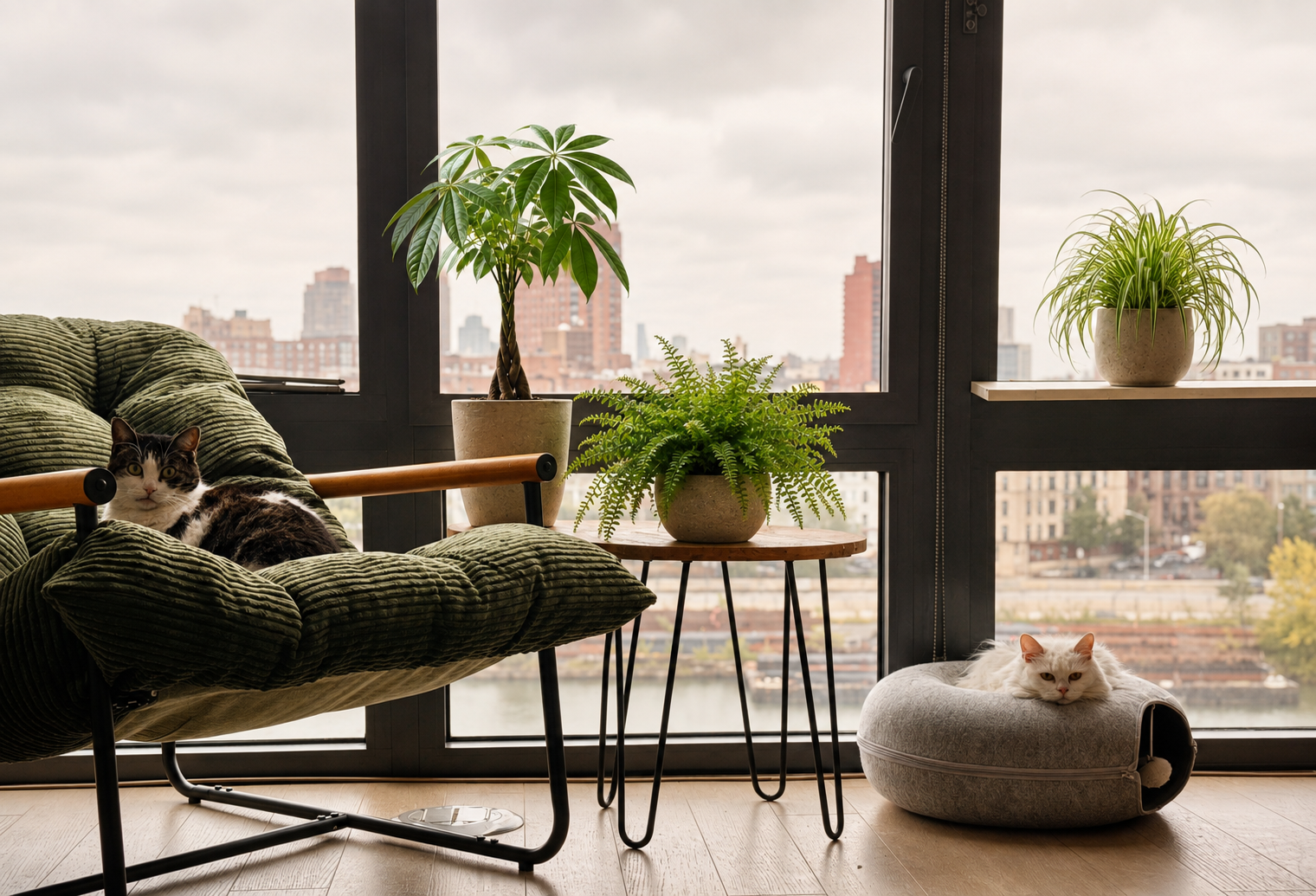
For those of us who dream of one day owning a homestead in the countryside, creating a green oasis at home is one way to begin living that dream now.
Indoor plants cannot replace fresh outdoor air, time in nature, or a garden rooted in the earth. But they can bring life, texture, seasonal awareness, and a sense of calm into even the smallest apartment. Caring for them invites us to slow down and participate in the quiet rhythms of watering, pruning, propagation, and new growth.
Until the day we have acres of land to tend, a windowsill, shelf, or apartment corner can become a small urban garden of its own.
Reviewed and updated November 7, 2026.
Finding Nature in New York City
When I moved to New York City more than a decade ago, I quickly realized how much I missed the greenery and fresh air of my childhood.
New York is fortunate to have many beautiful parks, but daily life still meant traffic, crowds, concrete, and constant stimulation. I began bringing plants into my apartment because I wanted a connection to nature that did not require planning a trip or leaving home.
On difficult days, watering and caring for my plants became a small escape. It gave me a reason to pause, pay attention, and step briefly outside the pace of city life. New leaves became reminders that growth is often gradual, resilience can be quiet, and living things respond to consistent care.
I began with a small lucky bamboo plant in college. I kept it in a vase with marbles and water, and it seemed remarkably forgiving. Despite its common name, lucky bamboo is not a true bamboo—it is a species of Dracaena. It tolerates lower-light conditions, although it generally grows best in medium to bright indirect light.
Years later, during the pandemic, I added a small money tree. Lucky bamboo and money trees are commonly associated with prosperity and good fortune in feng shui and popular East Asian traditions. Naturally, I hoped a little financial good luck might flow my way. Life in New York is expensive, after all.
Did it work? It is difficult to say, but the romantic in me likes to believe it did.
What Indoor Plants Can—and Cannot—Do for Your Health
Plants can make a home feel restorative, but it is important to separate the emotional and practical benefits of indoor gardening from claims that have been overstated.
They May Support Stress Relief
Research suggests that interacting with plants may help some people feel calmer. In a small controlled study, participants experienced lower psychological and physiological stress after transplanting an indoor plant than after completing a computer task. A more recent crossover study also found improvements in perceived stress and fatigue when participants worked in an office containing plants.
These studies are encouraging, but they are generally small and do not prove that houseplants treat anxiety, depression, or other health conditions. The benefit may come from several overlapping factors: visual exposure to greenery, taking a break from screens, working with the hands, and having something living to nurture.
For me, the ritual matters as much as the plant itself.
They Can Create Opportunities for Mindfulness
Checking the soil, wiping a leaf, noticing a new shoot, or turning a pot toward the light can become a grounding practice. These small acts bring attention back to the present moment.
For caregivers and anyone moving through a demanding season of life, plant care can provide a manageable form of stewardship. Unlike a large garden, an indoor garden can begin with one pot and a few minutes of care.
It should feel supportive, however—not like another obligation. If a collection becomes stressful, it is perfectly reasonable to keep fewer plants.
They Can Make a Space Feel More Restorative
Plants introduce natural color, texture, and organic shapes into built environments. Some studies associate exposure to indoor greenery with improved mood, attention, or perceptions of comfort, although results vary according to the study design, setting, and individual.
A houseplant is not a medical treatment, but it may help create an environment that feels warmer, more personal, and less disconnected from nature.
Their Effect on Humidity Is Usually Modest
Plants release water vapor through transpiration and may contribute a small amount of moisture to the surrounding air. In a typical home, however, the effect depends on the number and size of the plants, room dimensions, ventilation, temperature, and watering habits.
Houseplants should not be relied upon as humidifiers. Excessively damp soil can encourage root rot, fungus gnats, and mold. The CDC recommends keeping indoor humidity no higher than 50 percent when possible to discourage mold growth.
They Do Not Meaningfully Purify the Air in Most Homes
The belief that houseplants substantially remove indoor air pollutants originated largely from experiments conducted in small, sealed chambers. Under ordinary household conditions, a scientific review found that natural ventilation and air exchange remove volatile organic compounds much faster than a practical number of houseplants could.
Plants can still make a room feel fresher, but they are not replacements for:
- Opening windows when outdoor conditions permit
- Using kitchen and bathroom exhaust fans
- Addressing sources of smoke, moisture, or chemical emissions
- Maintaining heating and cooling systems
- Using an appropriately selected air cleaner when needed
Good indoor air quality begins with controlling pollution at its source, ventilating the space, and using filtration where appropriate.
Building a Cat-Safer Indoor Garden
Plant selection becomes especially important when we share our homes with cats.
Several popular houseplants can cause oral irritation, vomiting, diarrhea, or more serious poisoning. A high shelf is not always sufficient protection. Cats can climb, leaves can fall, and soil or plant material can be carried to the floor.
This is particularly important in my home, which I share with my cats Momo and Gigi. Although they may not jump as much as they once did, age is not a guarantee that a plant is inaccessible. For that reason, I now think of pet safety as part of plant care rather than as an afterthought.
A Note About Lilies
True lilies and daylilies—plants in the genera Lilium and Hemerocallis—are extraordinarily dangerous to cats. Ingesting even a small amount of a leaf, flower, pollen, or vase water can result in acute kidney injury and may be fatal.
Peace lilies are not true lilies and do not cause the same form of kidney failure. They are still considered toxic, however, because their insoluble calcium oxalate crystals can cause intense irritation of the mouth, drooling, pawing at the face, vomiting, and difficulty swallowing.
True lilies and daylilies should not be brought into a home with cats.
Popular Houseplants: Care and Cat Safety
Plant-care needs vary with light, humidity, pot size, soil, and season. Rather than watering strictly according to the calendar, check the plant and its soil first.
Lucky Bamboo (Dracaena sanderiana)
Cat safety: Toxic to cats.
Lucky bamboo can be grown in water or well-draining potting mix. When grown in water, keep the roots covered but avoid deeply submerging the stalk, which can encourage rot. Refresh the water and clean the container periodically.
It tolerates lower light but generally prefers medium to bright indirect light. Direct afternoon sun may scorch the leaves.
Because lucky bamboo is a Dracaena, it should be kept in a genuinely inaccessible enclosure or avoided in homes where cats investigate plants.
Money Tree (Pachira aquatica)
Cat safety: Listed by the ASPCA as non-toxic to cats.
Money trees prefer bright, indirect light, although they can adapt to moderate light. Water thoroughly when the upper portion of the potting mix has dried, and allow excess water to drain.
A non-toxic classification does not mean that eating large quantities is harmless. Chewing plant material can still cause stomach upset, so discouraging access remains sensible.
Snake Plant (Dracaena trifasciata)
Cat safety: Toxic to cats.
Formerly classified as Sansevieria trifasciata, the snake plant is drought tolerant and adaptable to a range of indirect-light conditions. Its greatest enemy is usually excessive watering.
Because it contains compounds that can cause gastrointestinal symptoms in cats, it is not a good choice for an accessible floor planter in a cat-friendly home.
Pothos (Epipremnum aureum)
Cat safety: Toxic to cats.
Pothos is popular because it tolerates a range of indoor conditions and produces trailing vines. Those vines can also make the plant particularly tempting and easy for cats to reach.
The plant contains insoluble calcium oxalate crystals that can cause painful oral irritation, drooling, vomiting, and difficulty swallowing.
Peace Lily (Spathiphyllum species)
Cat safety: Toxic to cats.
Peace lilies prefer evenly moist—but not waterlogged—soil and medium to bright indirect light. Although they tolerate dimmer rooms, they may flower less frequently there.
As noted above, peace lilies are not true lilies, but chewing them can still cause significant oral irritation.
Aloe Vera (Aloe vera)
Cat safety: Toxic to cats.
Aloe requires bright light and fast-draining soil. Allow the potting mix to dry substantially between waterings.
Although the purified inner gel is used in many human products, other parts of the plant contain compounds that may cause vomiting, diarrhea, or lethargy in cats.
Monstera (Monstera deliciosa)
Cat safety: Toxic to cats.
Monsteras are beautiful, but their leaves contain insoluble calcium oxalate crystals. I would not consider reduced jumping by a senior cat sufficient protection. In a home with curious cats, a closed plant cabinet or a truly pet-free room is safer than an open shelf.
Lower-Risk Plants for Homes with Cats
For a more relaxed indoor garden, consider plants listed as non-toxic by the ASPCA. Options include:
- Money tree (Pachira aquatica)
- Spider plant (Chlorophytum comosum)
- Parlor palm (Chamaedorea elegans)
- Boston fern (Nephrolepis exaltata)
- Many peperomias (Peperomia species)
- Many prayer plants in the Calathea and Goeppertia groups
- Moth orchid (Phalaenopsis species)
Common plant names are not always reliable, so verify the scientific name before buying. Even non-toxic plants can cause mild digestive upset if a pet eats enough of them. Potting mixes, fertilizers, pesticides, decorative moss, and self-watering additives may introduce separate hazards.
If a cat chews an unknown plant, remove access, photograph or identify the plant, and contact a veterinarian or animal poison-control service. Suspected exposure to a true lily or daylily requires immediate emergency veterinary care.
Practical Tips for a Thriving Indoor Garden
Water According to the Plant, Not the Calendar
“Water once a week” is rarely a universal rule. A plant near a sunny window may dry much faster than one across the room. Seasonal changes in light, heating, humidity, and growth also affect water use.
Before watering:
- Feel the upper layer of soil.
- Check the weight of the pot.
- Look for signs of excessive moisture or wilting.
- Consider the needs of the particular species.
Use containers with drainage holes whenever possible, and empty water that collects in saucers or decorative pots.
Begin With Your Light Conditions
Watch how sunlight moves through your home over the course of a day. A “low-light tolerant” plant may survive in dim conditions, but that does not mean it will thrive in darkness.
Remember that window direction, nearby buildings, curtains, and distance from the glass all affect usable light. If natural light is insufficient, a properly positioned grow light may be more effective than repeatedly moving a struggling plant.
Choose Fewer Plants and Care for Them Well
An indoor garden does not have to be a jungle. A few well-chosen plants are easier to inspect, water, clean, and keep safely separated from pets.
Starting small also makes it easier to learn how each plant responds to your particular home.
Inspect New Plants Before Bringing Them Inside
Check the leaves, stems, and soil for pests such as spider mites, scale, thrips, and fungus gnats. When possible, keep new plants separate from the rest of your collection for a short observation period.
Keep Leaves Clean
Dust can reduce the amount of light reaching a leaf. Wipe broad leaves gently with a damp cloth or rinse plants that tolerate showering. There is generally no need to use commercial leaf-shine products.
Rotate Thoughtfully
Plants often lean toward their strongest light source. A quarter turn occasionally can encourage more even growth, although plants that dislike being moved should be handled more conservatively.
Prevent Dampness and Mold
Avoid allowing pots, saucers, or decorative containers to remain filled with standing water. Improve airflow around crowded plants and remove decaying leaves promptly.
If someone in the home has asthma, mold allergies, or a weakened immune system, be especially attentive to persistently damp soil or visible mold.
Make Plant Care Easier on the Body
For older adults and caregivers, place frequently tended plants at a comfortable height. Choose lightweight pots or use rolling plant stands for larger containers. Keep pathways clear, manage trailing vines, and clean spilled water promptly to reduce fall hazards.
A small watering can, moisture-resistant tray, and long-handled tools can make the routine easier and more enjoyable.
Growing the Life We Envision
Creating an urban garden is not about pretending that an apartment is a farm or that a collection of houseplants can provide every benefit of time outdoors.
It is about making room for something living.
A money tree by the window, herbs under a grow light, or a spider plant sending out its first new shoot can reconnect us with patience and seasonal change. These small acts of cultivation allow us to practice the values behind homesteading—care, observation, resourcefulness, and respect for living systems—wherever we happen to live.
Until we find ourselves on that dream homestead, we can tend the piece of earth currently available to us, even if that piece fits inside a flowerpot.
Are you cultivating an indoor garden? What plants thrive in your city home—and how do you keep them safe for the animals who share your space?
Sources & Further Reading
- Cummings, B. E., & Waring, M. S. (2020). Potted plants do not improve indoor air quality: A review and analysis of reported VOC removal efficiencies. Journal of Exposure Science & Environmental Epidemiology, 30, 253–261. PubMed
- Lee, M. S., Lee, J., Park, B. J., & Miyazaki, Y. (2015). Interaction with indoor plants may reduce psychological and physiological stress by suppressing autonomic nervous system activity in young adults. Journal of Physiological Anthropology, 34, 21. PubMed
- Zhang, G., et al. (2025). The restorative effects of working individually in a vegetated office space. PubMed
- American Society for the Prevention of Cruelty to Animals. Toxic and Non-Toxic Plants List—Cats
- Centers for Disease Control and Prevention. About Mold and Your Health
- U.S. Environmental Protection Agency. Indoor Air Quality
Leave a Reply