
For years, I struggled with acne that followed me from adolescence well into adulthood. Like many people, I tried countless skincare products and treatments—some helpful, some disappointing, and many costly.
Eventually, I began paying closer attention to my diet, digestion, stress, sleep, and everyday routines. Looking beyond the surface did not reveal one magical solution. It helped me see that caring for my skin belonged within a more complete approach to well-being.
That is the perspective behind River Ternary’s Body, Mind, and Home philosophy: nourish yourself, make space for rest, and build routines that support you. Skin symptoms deserve care in their own right, too. They are not a measure of how well you have eaten or how successfully you have managed stress.
Reviewed and updated November 7, 2026. This article focuses primarily on acne; findings about one skin condition should not automatically be applied to another.
What the Gut–Skin Connection Means
The term gut–skin axis describes possible communication between the intestinal microbiome, immune system, metabolism, nervous system, and skin. The gut microbiome includes communities of microorganisms and their associated genetic material; these organisms help process food and interact with our bodies. A review by Salem and colleagues describes the biological pathways researchers are exploring.
Differences in gut microbes have been reported between people with acne and comparison groups. Those observations do not establish that the differences caused the acne. Diet, medications, existing disease, and other factors can influence both.
The useful distinction is between a plausible mechanism and an effective treatment. Showing that microbes interact with immune signals is not the same as showing that changing those microbes will clear someone’s skin.
Acne Has More Than One Cause
Acne involves oil production, blocked follicles, inflammation, microbial activity, and hormonal and genetic influences. The American Academy of Dermatology’s acne guideline describes these interacting processes. Acne is not simply evidence of dirty skin or a digestive problem.
A varied diet can support general health, while acne may still need its own treatment. The same applies to eczema, rosacea, and other skin conditions: similar words such as “inflammation” do not make them interchangeable diagnoses.
Diet and Acne: What the Evidence Suggests
Glycemic Patterns
Small trials have reported improvements in acne with lower-glycemic eating patterns, while other studies have not found the same relationship. AAD’s patient guidance explains both the potential connection and the uncertainty.
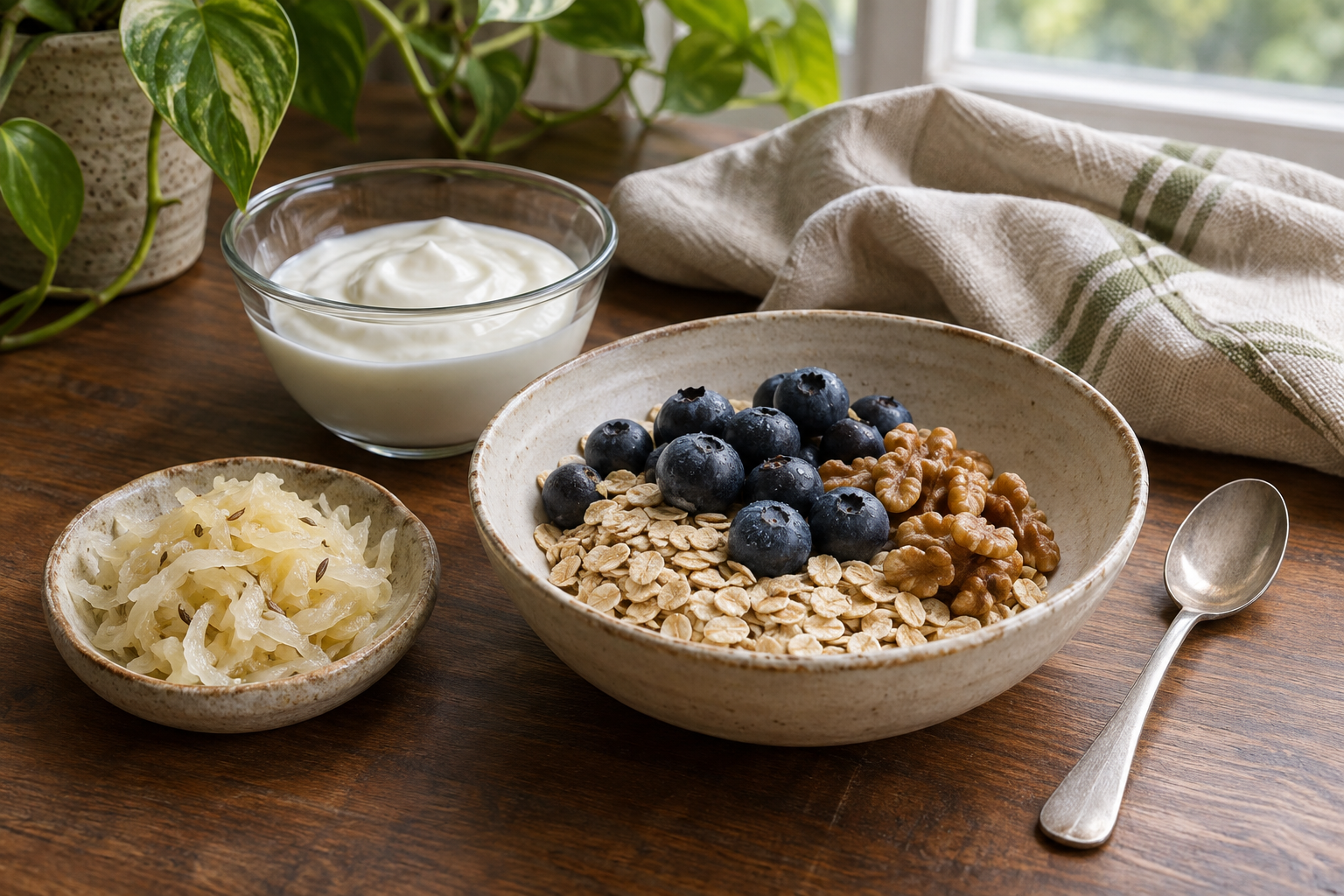
A practical approach is to include foods such as oats, beans or lentils, vegetables, and whole fruit when they suit you, alongside adequate protein and fats. This is a pattern to explore, not a reason to fear rice, bread, or an occasional dessert.
Milk and Dairy
Some observational studies link cow’s milk intake with acne, but they cannot prove cause and effect. Findings should not be generalized to every dairy food or every person. AAD notes that yogurt and cheese have not shown the same evidence of increased breakouts.
If you notice a repeated pattern, discuss it with a registered dietitian or healthcare professional. A brief record of food, symptoms, menstrual changes, medications, and skincare may help the conversation. Avoid cutting out several major food groups at once; doing so makes patterns harder to interpret and can leave nutritional gaps.
Overall, AAD’s 2024 guideline update found insufficient evidence to make treatment recommendations for dietary changes. A possible dietary contribution should be considered alongside effective acne care, rather than used to delay it.
Probiotics Are Still an Open Research Question
A 2024 randomized trial by Eguren and colleagues found improvements in some acne outcomes after 12 weeks with one particular combination product. A small trial of a specific L. plantarum strain also reported benefits. These findings apply to the formulations and circumstances studied.
The overall picture is less certain. A 2026 meta-analysis of five trials combining oral and topical Lactobacillus-based probiotic or postbiotic interventions did not find statistically significant reductions in acne lesion counts overall. Different products, comparisons, and outcomes make results difficult to generalize.
A yogurt, a fermented pickle, and a probiotic capsule are not interchangeable. NCCIH emphasizes that effects can differ between microorganisms and products. If you are considering a supplement, discuss it with your clinician, particularly if you have a serious illness or a weakened immune system.
Three Terms That Often Get Mixed Together
- Probiotics: Live microorganisms with evidence of a health benefit when used in an adequate amount. A useful product claim needs more detail than simply “contains good bacteria.”
- Prebiotics: Substances selectively used by microorganisms that provide a health benefit. Some fibers qualify, but the terms “fiber” and “prebiotic” are not identical.
- Fermented foods: Foods made through microbial activity. They can be valued for flavor, texture, preservation, and nutrition, whether or not living organisms remain when they are eaten.
The ISAPP consensus statement on fermented foods explains why fermentation does not automatically make a food a proven probiotic. Heating or processing may remove living microbes, and an untested mixture of organisms cannot be assigned the effects of a studied strain.
Traditional Foods Have Value Beyond a Health Claim
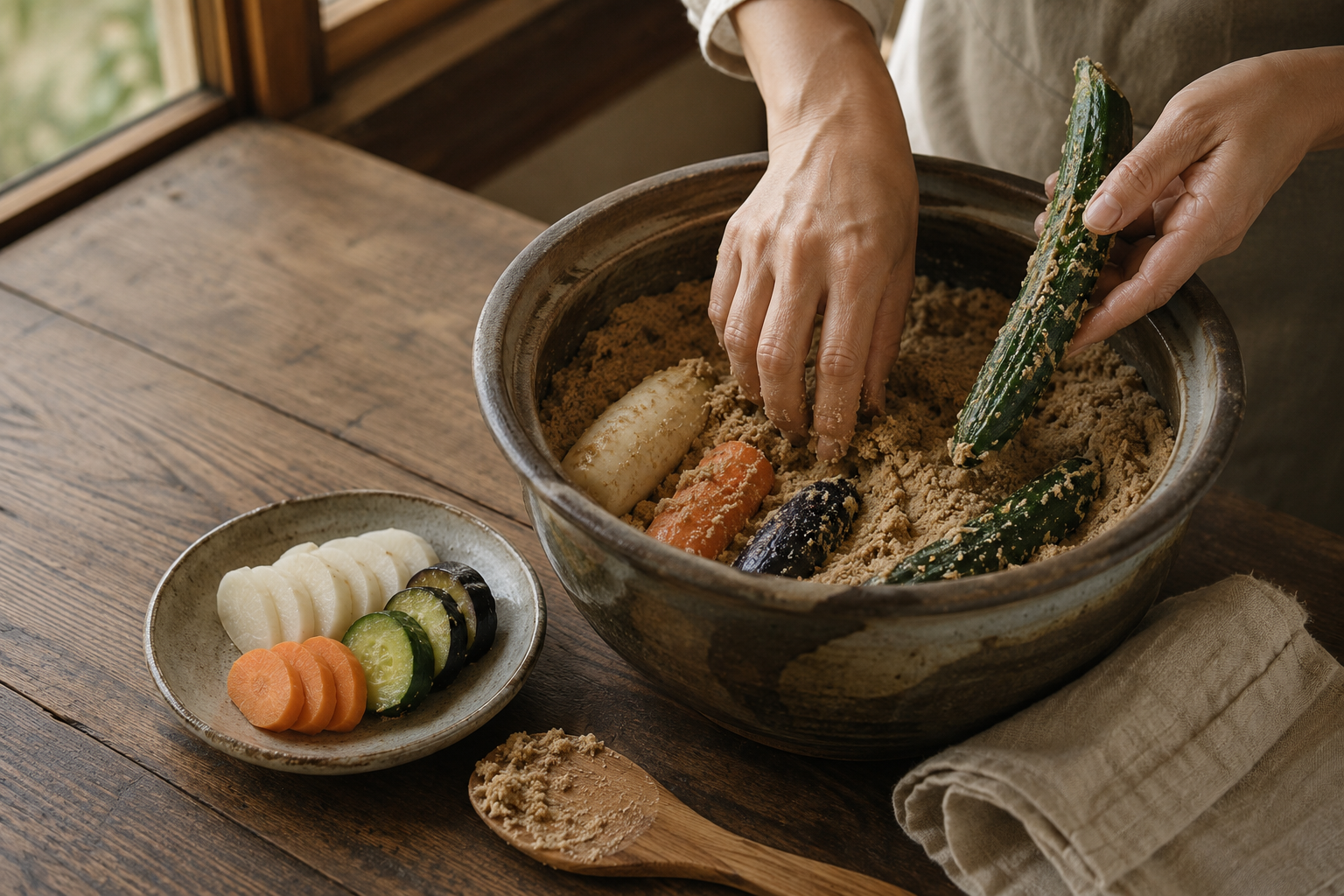
My grandparents in Japan made nukamiso—the rice-bran fermentation bed used to prepare nukazuke. Vegetables were buried in the seasoned bran and served as tart, savory pickles with our meals. The fermentation bed was tended regularly, creating a small daily ritual of care.
That tradition connects food with family, seasonality, and resourcefulness. Its meaning does not depend on proving that every serving will change the gut microbiome or improve a complexion.
- Yogurt and kefir: Look for live-culture information if that matters to you, and choose products that fit your tolerance and nutritional needs.
- Kimchi, sauerkraut, and nukazuke: Enjoy small portions as accompaniments. Live organisms and salt levels vary with the product and preparation.
- Miso and tempeh: These are fermented foods often eaten after heating. Their place in a meal can be appreciated without expecting live-probiotic effects.
- Kombucha: An optional beverage, not an acne treatment or necessary daily habit.
In a small dietary trial by Wastyk and colleagues, a high-fermented-food diet increased microbial diversity and reduced some inflammatory markers in healthy adults. That study did not test whether fermented foods treat acne. Improvements in a laboratory marker should not be presented as proof of a skin benefit.
Make the Everyday Foundations Easier
You do not need an expensive gut-health routine to begin caring for yourself. Choose one change that fits your circumstances:
- Body: Build meals around enough food, a protein source, and plant foods you enjoy and tolerate. Keep a few dependable options available for busy days.
- Mind: Notice patterns without turning every breakout into a verdict on what you ate. Give yourself room to rest and seek support when a skin condition is affecting your confidence.
- Home: Make it easier to prepare a simple meal, keep skincare supplies accessible, and protect a realistic wind-down routine. Supportive systems can reduce the effort of daily care.
Increase fiber gradually if you are adding more to your diet. NIDDK explains that a sudden increase can cause gas and worsen symptoms for some people with IBS. Onion, garlic, beans, and fermented foods are not requirements if they make you feel unwell. Persistent symptoms deserve individual assessment.
For skin care, AAD recommends a gentle approach: avoid harsh scrubbing and picking, and choose products labeled non-comedogenic. Keep prescribed treatment in the plan unless your healthcare professional advises a change.
Be Careful With “Gut Reset” Promises
There is no single perfect microbiome shared by everyone. An international consensus statement on microbiome testing describes the limited clinical usefulness of many consumer tests and discourages requesting them without a clinical recommendation. A commercial stool report cannot, by itself, identify the cause of someone’s acne or select a proven clear-skin diet.
Likewise, acne alone does not establish that you have “leaky gut,” a nutrient deficiency, or a hormone imbalance. Restrictive cleanses and supplement protocols deserve scrutiny when they offer those explanations without an appropriate medical assessment.
When to Ask for Help
Seek dermatology care for deep or painful acne, scarring, or breakouts that persist despite appropriate care. AAD’s adult acne guidance explains when professional treatment matters. You do not need to solve your diet first before asking for help.
Persistent digestive symptoms also deserve attention. NIDDK advises prompt care for symptoms such as blood or black, tarry stools, severe abdominal pain, frequent vomiting, or dehydration. A wellness routine should not postpone medical evaluation.
Care for the Whole Person
My experience taught me to look beyond the surface of my skin. It did not teach me that everyone’s acne has the same cause or solution. Supporting nutrition, rest, and daily routines can be worthwhile even when those changes do not clear a skin condition.
The aim is to make room for your well-being while respecting the needs of your skin and digestive system. Curiosity is useful; self-blame is not.
For practical food guidance, read My 3 Simple Rules for Eating. Explore Sleep Health and the Personal Wellness & Care collection for related routines.
If you would like support putting everyday habits into practice, explore River Ternary Wellness Coaching or schedule a complimentary discovery call. Coaching supports habits and organization; it does not diagnose or treat acne or digestive disease.
Sources & Further Reading
- Salem et al. (2018). The Gut Microbiome as a Major Regulator of the Gut–Skin Axis. Frontiers in Microbiology, 9, 1459. A review of proposed mechanisms.
- Reynolds et al. (2024). Guidelines of care for the management of acne vulgaris. Journal of the American Academy of Dermatology. See also AAD’s guideline summary, diet and acne guidance, and skin-care advice.
- Eguren et al. (2024). A Randomized Clinical Trial to Evaluate the Efficacy of an Oral Probiotic in Acne Vulgaris. Acta Dermato-Venereologica, 104, adv33206.
- Kim et al. (2021). Effects of Lactobacillus plantarum CJLP55 on Clinical Improvement, Skin Condition and Urine Bacterial Extracellular Vesicles in Patients with Acne Vulgaris. Nutrients, 13(4), 1368.
- Ul Abedin et al. (2026). Lactobacillus-Based Microbiome Therapy for Acne Vulgaris: A GRADE Systematic Review and Meta-Analysis of Randomized Controlled Trials. Journal of Cosmetic Dermatology, 25(3), e70792.
- Marco et al. (2021). ISAPP consensus statement on fermented foods. Nature Reviews Gastroenterology & Hepatology, 18, 196–208.
- Wastyk et al. (2021). Gut-microbiota-targeted diets modulate human immune status. Cell, 184(16), 4137–4153.e14. This was not an acne-treatment study.
- International consensus statement on microbiome testing in clinical practice (2025). The Lancet Gastroenterology & Hepatology, 10(2), 154–167.
- NCCIH: Probiotics—Usefulness and Safety; NIDDK: Eating, Diet, & Nutrition for IBS; NIDDK: Diarrhea Symptoms & Causes.
Educational content, not individualized medical or nutrition advice. Illustrative food images do not demonstrate a treatment effect.
Leave a Reply