
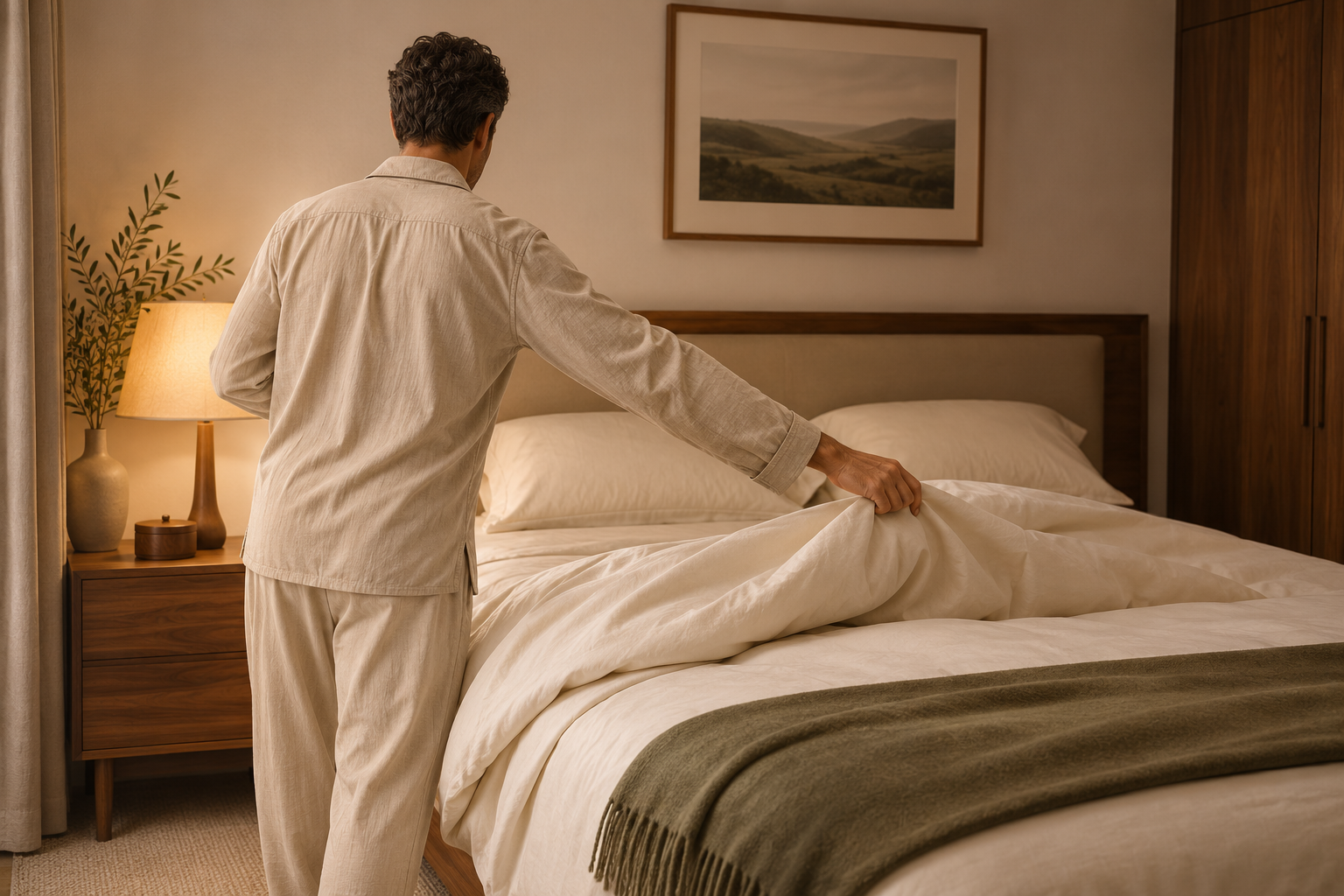
What do you reach for at bedtime: cotton pajamas, a silk nightdress, an old T-shirt, or nothing at all?
I personally wear only 100% cotton or silk to bed. I enjoy the feel of natural fibers, and comfort is part of how I settle in for the night. Other people prefer their birthday suit. Neither preference needs to become a rule for everyone.
What deserves more attention is how your choice feels once you are actually in bed. Can you turn over freely? Does the waistband dig in? Do you wake up hot, damp, or tangled in fabric?
Comfort Starts With Temperature
As we approach sleep, our core body temperature normally falls, helped by heat leaving through the skin. That does not mean the colder you feel, the better you will sleep: research on warm hands and feet shows how skin warmth and heat loss can work together to support sleep onset.
Think of your sleepwear, sheets, blankets, and room as one system. A light nightdress under a heavy duvet can feel warmer than pajamas under a thin blanket. Aim for a combination that keeps you comfortable without overheating or feeling chilled.
Cotton, Silk, and What the Studies Actually Show
Cotton: A familiar natural fiber that absorbs moisture. A lightweight cotton garment and thick cotton flannel can feel very different, so consider the fabric’s weight and construction alongside its fiber content. The sleepwear research does not establish cotton as the best choice for everyone.
Silk: A reasonable choice if you enjoy its feel and can manage its care requirements. Textile research examines how silk and cotton transfer heat, but a fabric’s physical properties alone do not prove that silk pajamas improve deep sleep or overall health. Check the fiber label: “satin” describes a weave and does not necessarily mean silk.
A surprising alternative: Small trials have found some sleep benefits from fine Merino wool. A study of 17 young adults found faster sleep onset with wool than cotton in a cooler room. A study of 36 adults aged 50–70 found some advantages in warm conditions, particularly in certain subgroups. These findings are limited, and the latter study involved wool-industry participation. They do not establish a universal winner.
My preference for cotton and silk is a personal choice. You can favor natural materials while recognizing that fit, fabric construction, bedding, and individual comfort also matter.
Give Your Body Room to Move
Sleepwear should accommodate the positions you actually sleep in. Stretchy does not always mean comfortable: fitted pajamas can stretch while still feeling compressive around the abdomen, hips, or knees.
Before keeping a pair of pajamas, try a small bedtime fitting:
- Lie down, roll onto each side, and bend your knees.
- Reach your arms overhead and notice pulling at the shoulders or underarms.
- Check whether the waistband presses into your abdomen or rolls into a tight cord.
- Notice cuffs, seams, buttons, and excess fabric that bunches underneath you.
Choose enough room to move without so much extra fabric that you become tangled. A loose nightshirt, relaxed pajama set, or comfortably adjusted drawstring may suit you better than tight or constricting pajamas. This is a practical comfort check, rather than a claim that a particular cut guarantees better sleep.
When a Waistband Leaves You Itching
Itching where a band sits can involve rubbing, sweat, or a reaction to something in the garment. DermNet explains that elastic, dyes, and textile finishes can cause contact dermatitis, and friction and sweating can worsen irritation. Even natural-fiber clothing can contain an irritating dye or elastic component.
If a waistband repeatedly leaves you itchy or sore, change to a gentler fit rather than sleeping through the discomfort. Wash new sleepwear according to its care label and notice whether a particular garment or laundry product seems to trigger a reaction. A persistent or recurring rash deserves medical advice.
Pressure, nerve compression, and circulation are different issues. We should not assume that an itchy band or a temporary elastic mark means blood flow is impaired. Very tight clothing around the waist can compress a sensory nerve and cause outer-thigh tingling, numbness, or burning—a condition described by Mayo Clinic as meralgia paresthetica. That is different from poor circulation. Remove clothing that causes pain or numbness and seek care if symptoms persist.
What About Sleeping in Your Birthday Suit?
Removing a clothing layer may feel better if you run hot or dislike waistbands and seams. That is a plausible comfort benefit, based on how clothing changes insulation. It is not proof that sleeping nude itself improves sleep or provides special health benefits.
Fertility claims need particular care. A prospective study of 501 couples examined men’s daytime and bedtime underwear choices and found no significant differences in time to pregnancy or infertility. We cannot use underwear research to promise that sleeping naked boosts fertility.
If you prefer sleeping nude, consider how your sheets feel directly against your skin and adjust your covers for warmth. If you prefer clothing, a comfortable, relaxed garment is a reasonable option too.
A Small Change for Tonight
Start with what you already own. Choose something that feels pleasant against your skin, lets you change positions easily, and stays comfortable around your waist. Then notice whether adjusting the garment or a bedding layer makes the night more comfortable.
For the broader routine and bedroom environment, read Sleep Health: The Foundations of Restful Nights.
This article offers general education and practical comfort guidance. Sleepwear changes do not replace assessment of persistent sleep problems or skin symptoms.
Leave a Reply