
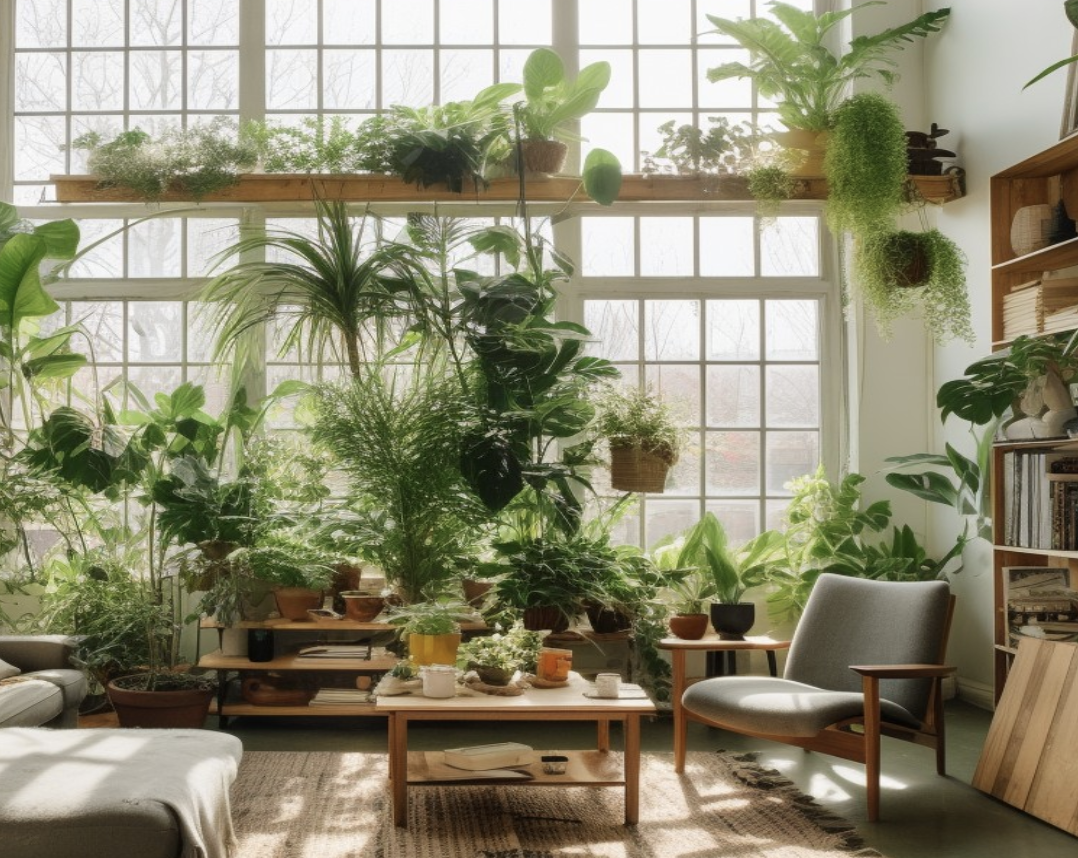
For many of us who dream of one day owning a homestead in the countryside, creating a green oasis in our city homes is a way to bring that dream to life—right now. Indoor plants allow us to reconnect with nature, even in the smallest apartments, and fill our spaces with the tranquility and vitality of the outdoors. Until the day we have acres of land to tend, we can cultivate our own urban gardens, creating a sanctuary of greenery that thrives indoors.
When I first moved to NYC, over a decade ago, I quickly realized how much I missed the greenery and fresh air of my childhood. Surrounded by the bustling sounds of traffic and the gray tones of concrete, I craved a slice of nature without having to go to the park (although in NY we are lucky to have several beautiful parks). That’s when I started filling my apartment with houseplants. Not only did they bring life to my small space, but they also offered an array of physical and mental health benefits.
On tough days, watering and caring for my plants became my little escape. It was a grounding moment, pulling me out of the fast-paced chaos of city life and into a state of calm. The green leaves were a reminder of growth and resilience, even in an environment that sometimes felt overwhelming.
I began with a small bamboo. I had one in college and remember how easy it was to maintain. I kept it in a vase with marbles and just ensured it was filled with water. It did not get any sun, but it still thrived. Then I got a little money plant a few years back during the pandemic. In East Asian culture, bamboo and money plants are often associated with wealth and prosperity. So naturally I selected these in hopes for a little financial good luck to flow my way. I was in desperate need of it to afford life in the big city. Did it work? Well, it’s hard to tell, but the romantic in me likes to believe it did.
The Health Benefits of an Indoor Garden
Bringing plants into our homes isn’t just about aesthetics; it’s about embracing the well-being that nature provides. When we garden—whether on a farm, in a backyard, or inside an apartment—we’re engaging in an age-old practice of connecting with the earth. Getting our hands in the soil, caring for our plants, and surrounding ourselves with greenery can offer several health benefits:
1. Improved Air Quality: Plants act as natural air purifiers, absorbing toxins like benzene and formaldehyde found in everyday household items. Cleaner air means easier breathing and a healthier living environment.
2. Stress Reduction: Tending to plants fosters a sense of calm and mindfulness. The simple act of watering, pruning, or observing growth can serve as a form of meditation, helping to reduce stress and anxiety.
3. Mental Clarity & Focus: Having plants in your space can boost cognitive function, improve focus, and enhance creativity. For those of us living in busy urban environments, plants create a much-needed mental reset.
4. Natural Humidity & Respiratory Benefits: Plants release moisture into the air, which can help combat dryness, especially during winter months when indoor heating depletes humidity. This added moisture can soothe dry skin and ease respiratory issues.
5. A Connection to the Earth: While we may not have access to a sprawling garden, the simple joy of tending to plants allows us to bring the essence of nature into our homes. Getting a little dirt under our fingernails and watching new growth emerge is a grounding experience, reminding us of the cycles of nature and our place within them.
Low-Maintenance Houseplants for Your Urban Garden
Not all plants require a green thumb. These low-maintenance options are perfect for city dwellers, bringing beauty and health benefits into your home with minimal effort. If you share your space with feline friends, note the plants that are toxic to cats.*
- Lucky Bamboo (Dracaena sanderiana):
- Watering: Keep the roots submerged in water or water the soil every 7–10 days.
- Light: Bright, indirect sunlight.
- Money Tree (Pachira aquatica):
- Watering: Once every 1–2 weeks. Allow the soil to dry out between waterings.
- Light: Bright, indirect light, but it can tolerate low light.
- Snake Plant (Sansevieria), toxic to cats:
- Watering: Every 2–3 weeks; let the soil dry completely.
- Light: Low to bright indirect light.
- Pothos (Epipremnum aureum), toxic to cats:
- Watering: Once a week; let the soil dry slightly.
- Light: Low to medium indirect light.
- Peace Lily (Spathiphyllum), toxic to cats:
- Watering: Once a week or when the soil feels dry.
- Light: Low to medium indirect light.
- Aloe Vera, toxic to cats:
- Watering: Once every 2–3 weeks; allow the soil to dry out completely.
- Light: Bright, indirect sunlight.
- Spider Plant (Chlorophytum comosum):
- Watering: Once a week; let the top inch of soil dry out.
- Light: Bright, indirect light.

If you have curious cats, consider placing toxic plants on high shelves or in hanging planters out of reach. My old cats no longer jump on shelves, allowing me to keep Monsteras and other beautiful plants in my home without worry. With a little creativity, it’s possible to create a space where plants and pets can coexist harmoniously.
Tips for Thriving Plants
- Stick to a schedule: Over watering is a common mistake. Most plants prefer to dry out a bit between watering.
- Know your light conditions: Observe where sunlight falls in your home before selecting plants.
- Rotate for even growth: Turn plants occasionally to ensure all sides get sunlight.
- Dust the leaves: Clean leaves help plants absorb more light and stay healthy.
Until we find ourselves on that dream homestead, creating an urban garden is a beautiful way to embrace nature and enjoy its many benefits. Whether you’re filling your space with greenery for health, aesthetics, or a touch of good fortune, every plant you nurture brings you one step closer to the life you envision.
Are you growing your own indoor garden? What are your favorite plants to keep in your city home?
Leave a Reply